Donate Adopt a coral I have a gift code

White Paper: The Coral Reefs

Through this booklet, we wanted to offer the general public a simple, fun and accessible way to understand the world of coral reefs and discover how everyone can contribute to their protection.

Because the first step towards protection is understanding.

Coral reefs have reached their tipping point

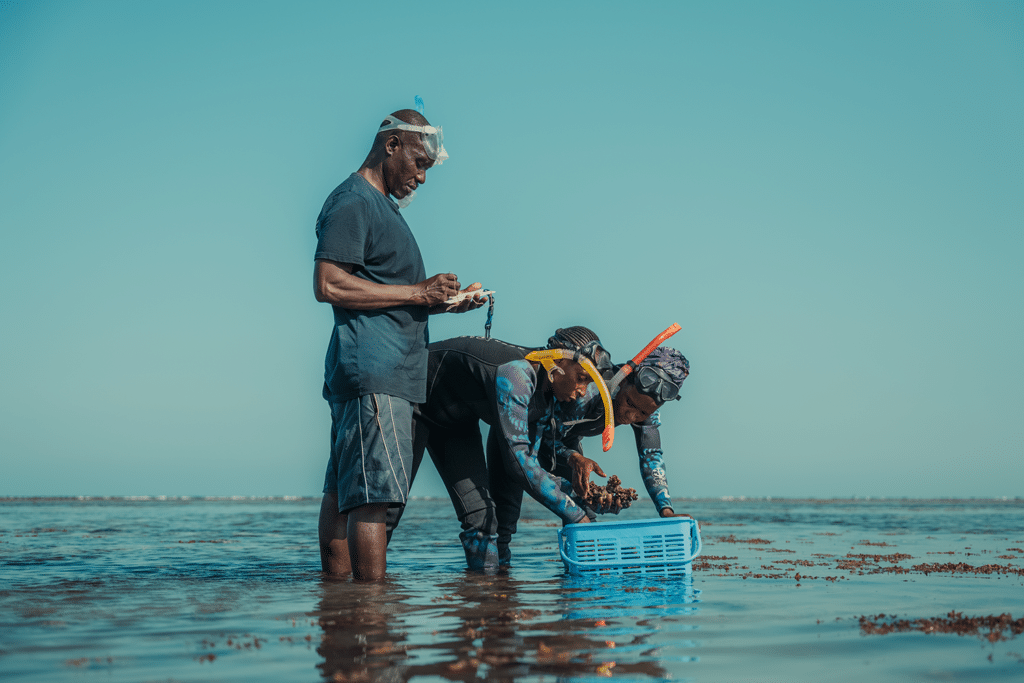
© Juliette Villechanoux

What scientists call the tipping point: the moment when reefs, threatened by global warming, pollution and overfishing, can no longer regenerate naturally.

Faced with these findings, the same questions keep coming up: Why is this so important? Can we still save them? And above all, what can we do, at our level?

We hear these questions every day. They reflect both growing concern and a tremendous surge of hope. For although coral reefs cover barely 0.2% of the oceans, they are home to more than 25% of marine life and provide food security, coastal protection and livelihoods for millions of people around the world.

For more than ten years, Coral Guardian has been working to prove that there is still time to reverse the trend. In Indonesia, Spain, Kenya and elsewhere, local communities are restoring degraded reefs every day. Corals are growing back, biodiversity is returning, life is resuming. These successes are proof that restoration is possible, if it is collective and participatory.

We hope that these pages will spark your curiosity, strengthen your connection to the ocean, and above all, inspire you to take action: whether by adopting a coral, sharing our messages, or simply changing your habits.

Download our white paper
Who are we?

© W2P - Aurélien Vineski

Since 2012, Coral Guardian has been working internationally to restore reefs. Our mission: to protect coral ecosystems through local action and the mobilisation of an international community. In 10 years, we have replanted more than 80,000 corals, restored nearly two hectares of reefs and contributed to the protection of 152 hectares in six different areas.

We have developed an innovative approach to protecting and restoring coral ecosystems, based on three pillars:

Participatory marine conservation: we restore degraded reefs and support local communities in creating marine protected areas.
Awareness-raising: we mobilise coastal populations and the general public to make coral protection a shared responsibility.
Science: our teams study how corals adapt to climate change and continuously improve restoration techniques.

Download our white paper