



Conducting coral restoration with limited resources
Coral restoration is often associated with specialised equipment, large scientific teams, and significant funding, particularly as coral reefs are identified as some of the most expensive ecosystems to restore (Bayraktarov, E. et al., 2016). Yet many restoration practitioners around the world work under very different conditions, often managing projects that are small in spatial scale – with a median size of only 100 m² – and frequently lack long-term monitoring (Boström-Einarsson, L. et al., 2020). Limited budgets, difficult logistics, and restricted access to materials are realities faced by numerous NGOs, local organisations, and community-led initiatives (Boström-Einarsson, L. et al., 2020; dela Cruz, D. W. et al., 2014).
Our Coral Connect workshop brought practitioners together to discuss the subject of conducting coral restoration with limited resources. Participants shared practical experiences and low-cost approaches currently being used in different restoration contexts. Rather than focusing on highly technical solutions, the workshop explored how restoration projects can adapt to local and financial constraints while maintaining effective field operations.
Using locally available materials
One of the recurring themes of the workshop was the importance of reducing construction costs and ecological impact by relying on locally available materials whenever possible.
Participants shared examples from different countries, including the use of construction steel bars for modular “spider” structures – a technique used to rehabilitate reefs affected by blast fishing (Boström-Einarsson et al., 2020). A well-known example is the Mars Assisted Reef Restoration System (MARRS), which uses locally fabricated steel Reef Star structures to stabilise coral rubble and support coral recovery.
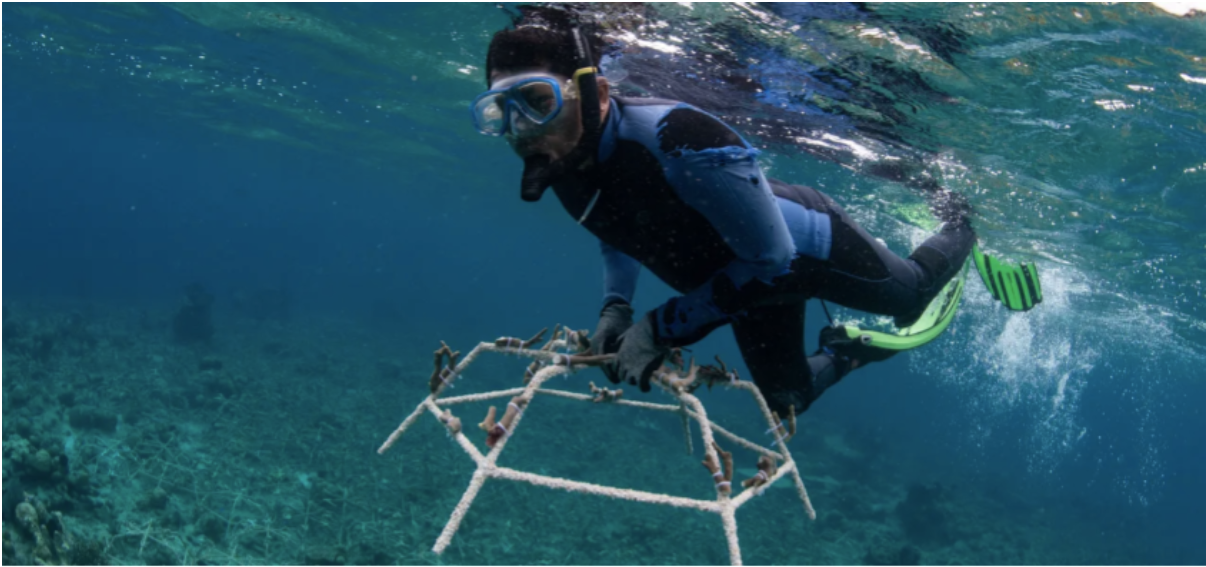
Figure 1: A diver deploys a Reef Star, a hexagonal steel structure used in the MARRs coral restoration system to support reef recovery
© Building Coral / Mars Sustainable Solutions (MARRS)
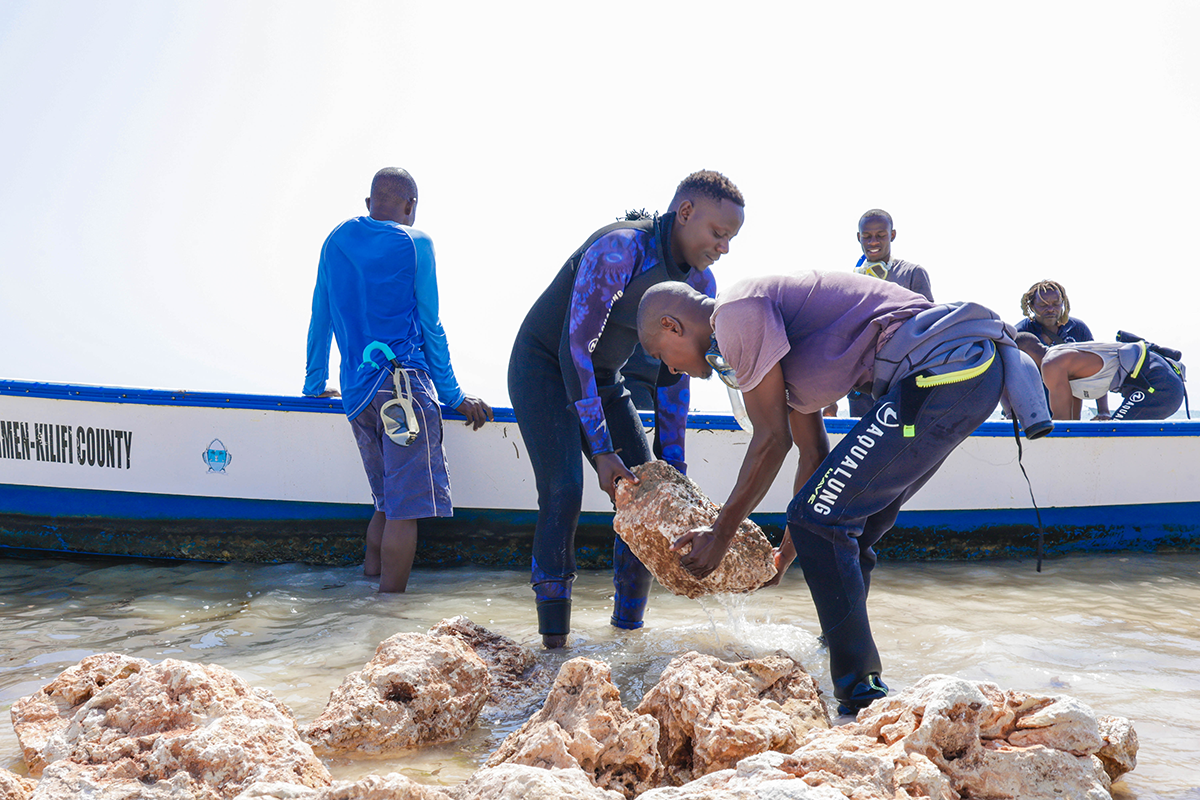
Figure 2: Ngurunga limestone restoration structures used by Oceans Alive Foundation in Kenya
© Oceans Alive
Workshop participants also highlighted the use of locally sourced limestone structures, including the “Ngurunga” structures used by Oceans Alive Foundation in Kenya. Other low-tech methods include using bamboo stakes to temporarily secure transplants and insulated wire to prevent dislodgement during rough weather (dela Cruz et al., 2014). These examples highlight how restoration practitioners often adapt their techniques to available resources instead of relying on imported and expensive specialised infrastructure.
Beyond material sourcing, participants also discussed the importance of working with local companies and service providers to reduce operational costs. Local partnerships can help make restoration projects more practical and affordable by improving access to materials, equipment, and logistical support. During the workshop, Reef Check Brunei shared how collaboration with local construction companies helped support restoration activities and overcome some of the challenges associated with working in the field.
Reducing operational costs in the field
The workshop also emphasised that restoration costs are not limited to materials alone. Site selection itself can strongly influence the long-term financial sustainability of a project, as restoration success depends primarily on the ecosystem and site choice rather than the amount of money spent (Bayraktarov, E. et al., 2016).
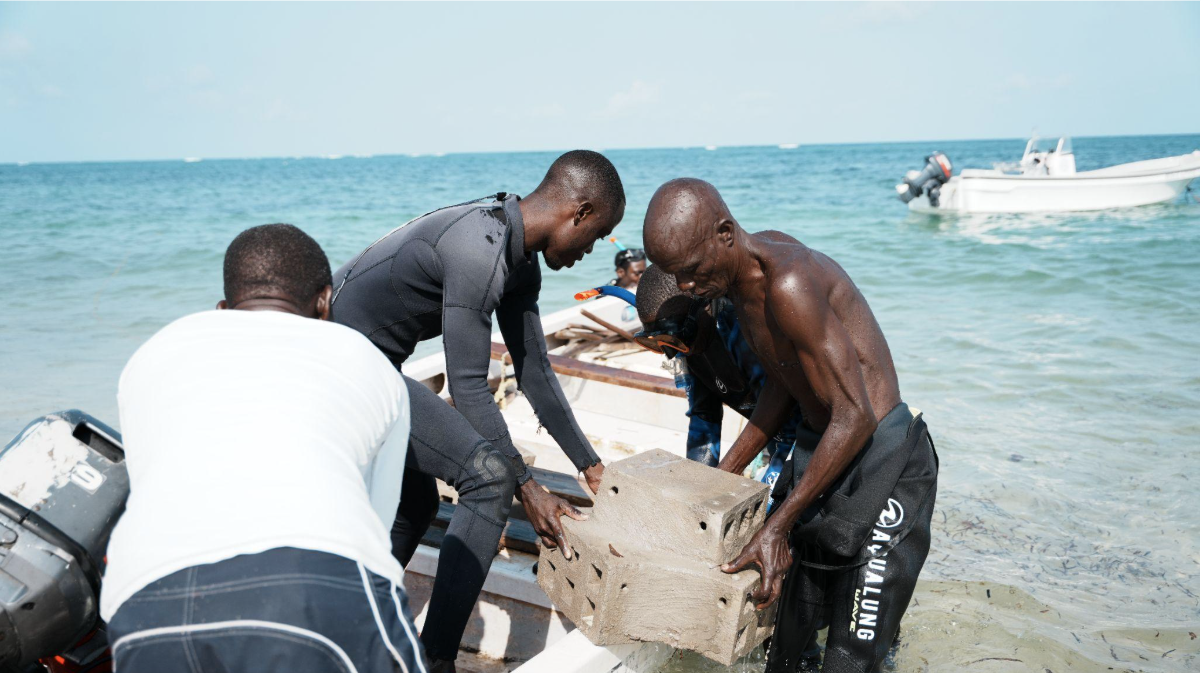
Figure 3: Community members prepare and transport restoration structures as part of coral restoration activities in Kenya
©Oceans Alive / Coral Guardian
Shallow and easily accessible restoration sites located close to roads or boat docking areas can significantly reduce fuel consumption, transportation time, and logistical complexity (Bayraktarov, E. et al., 2016). Participants also discussed the value of selecting low-tech and scalable restoration methods that remain accessible to organisations with limited funding or equipment.
Another point raised during the discussions concerned volunteer participation. In some low-budget projects, community or volunteer work can reduce restoration costs by up to 60% compared to using professional divers and hired labor (dela Cruz, D. W. et al., 2014). While this approach can help maintain field operations, workshop participants also noted that participation costs must remain affordable to encourage volunteer participation(Bayraktarov, E. et al., 2016).
Building restoration through collaboration
Aside from financial considerations, the workshop supported the importance of collaboration and knowledge-sharing in coral restoration.
Participants discussed how internship programmes, skills-sharing initiatives, and partnerships with external organisations can help NGOs access specialised support and additional human resources at reduced cost (Bayraktarov, E. et al., 2016). These approaches not only improve restoration capacity but also create opportunities for students, researchers, professionals and communities to contribute to marine conservation efforts.
Community involvement in particular provides a crucial sense of ownership and responsibility, which is vital for the long-term success of an intervention (dela Cruz, D. W. et al., 2014). Involving local stakeholders in restoration activities can help build awareness, encourage shared responsibility for reef conservation, and strengthen community engagement (Kittinger et al., 2016). By developing local expertise and promoting knowledge-sharing, community-based approaches can help restoration practices spread more widely and support the growth of cost-effective restoration initiatives (Westoby et al., 2020).
More broadly, the workshop demonstrated that coral restoration does not always require large-scale infrastructure or advanced technology to begin making an impact. In many cases, practical adaptation, local partnerships, and resourcefulness can play an equally important role in supporting restoration efforts. However, to truly evaluate success, monitoring must extend beyond short-term survival to assess the recovery of ecosystem functions over 15 to 20 years (Bayraktarov, E. et al., 2016).
Interested in learning more about practical and accessible approaches to coral restoration? Our Coral Connect workshops bring together coral restoration practitioners to exchange experiences, solutions and collaborative ideas from across the world. Interested in finding out more about our free digital knowledge sharing community? Join us here.
References:
Bayraktarov, E., Saunders, M. I., Abdullah, S., Mills, M., Beher, J., Possingham, H. P., Mumby, P. J., & Lovelock, C. E. (2016). The cost and feasibility of marine coastal restoration. Ecological Applications, 26(4), 1055–1074. https://doi.org/10.1890/15-1077
Boström-Einarsson, L., Babcock, R. C., Bayraktarov, E., Ceccarelli, D., Cook, N., Ferse, S. C. A., Hancock, B., Harrison, P., Hein, M., Shaver, E., Smith, A., Suggett, D., Stewart-Sinclair, P. J., Vardi, T., & McLeod, I. M. (2020). Coral restoration – A systematic review of current methods, successes, failures and future directions. PLOS ONE, 15(1), e0226631. https://doi.org/10.1371/journal.pone.0226631
Dela Cruz, D. W., Villanueva, R. D., & Baria, M. V. B. (2014). Community-based, low-tech method of restoring a lost thicket of Acropora corals. ICES Journal of Marine Science, 71(7), 1866–1875. https://doi.org/10.1093/icesjms/fst228
Kittinger, J. N., Teh, L. C. L., Allison, E. H., Bennett, N. J., Crowder, L. B., Finkbeiner, E. M., Hicks, C., Scarton, C. G., Nakamura, K., Ota, Y., Young, J., Alifano, A., Apel, A., Arbib, A., Bishop, L., Boyle, M., Cisneros-Montemayor, A. M., Hunter, P., Le Cornu, E., . . . Wilhelm, T. A. (2017). Committing to socially responsible seafood. Science, 356(6341), 912–913. https://doi.org/10.1126/science.aam9969
Westoby, R., Becken, S., & Laria, A. P. (2020). Perspectives on the human dimensions of coral restoration. Regional Environmental Change, 20(109). https://doi.org/10.1007/s10113-020-01694-7