


Meet Nancy Ogega, coral gardian at Kuruwitu, Kenya
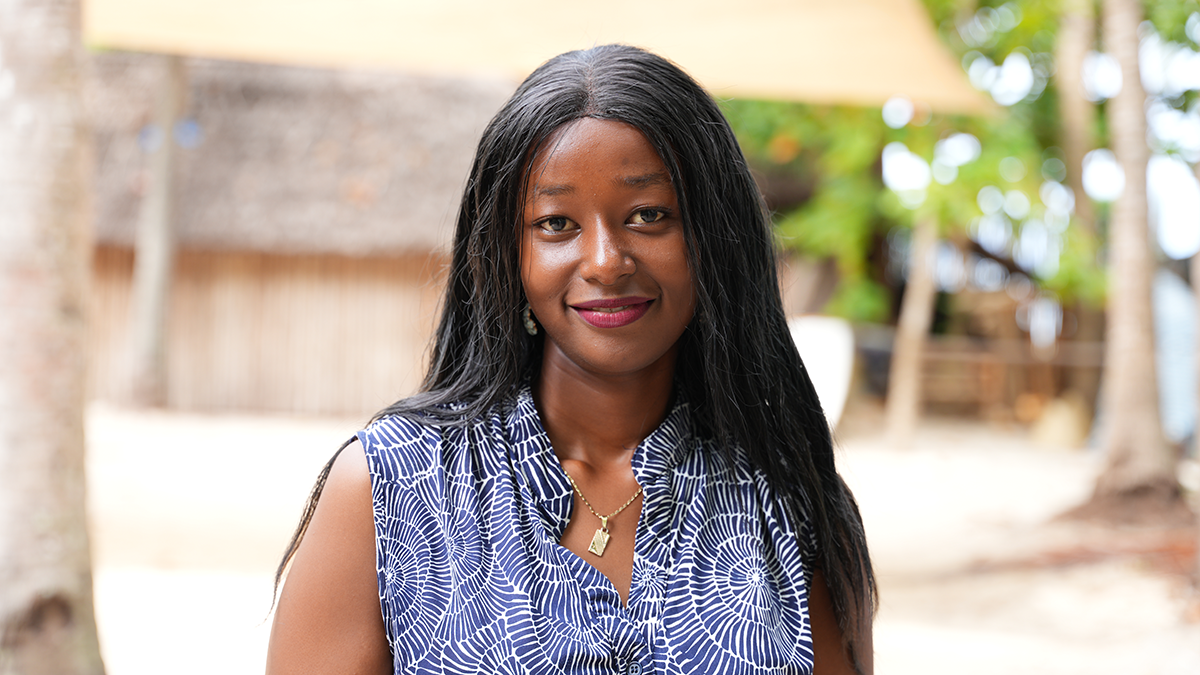
In this series of articles, we invite you to meet the people who shape our organisation — those who inspire and motivate us. For this second feature, we give the floor to Nancy Ogega, the project Manager of the REEL Project and the Oceans Alive Foundation’s Coral Scientific Outreach officer
Can you introduce yourself in a few words?
My name is Nancy Ogega. I work for Oceans Alive Foundation as a Coral Scientific Outreach officer. Under Project REEL I am the project manager. I live in Vipingo, Kenya.
How did you start working in coral restoration?
I developed a passion for coral reefs when undertaking my Bachelors Degree but I had no experience neither was I a diver. Shortly after, I applied for an opportunity to be trained as a PADI Open Water diver and PADI Coral Restoration diver in Reefo Divers which begun as a pilot project. After my 3 months training I became a reef ranger at the same place.
What motivated you to join the project REEL in collaboration with Coral Guardian?
Coral Guardian’s approach of combining science, community, and education. Their commitment to empowering local communities and ensuring that restoration has both ecological and social impact motivates me to be part of the project.
Is there a value or a word that sums up the spirit of Coral Guardian / the restoration programs for you?
Resilience. It captures both the strength of coral reefs to recover and the determination of the people protecting them.
What does a typical day look like for you in the field?
A typical day starts early with a briefing with my team members , followed by underwater activities whether it is monitoring or coral transplantation. We often check coral fragment survival rates, clean nurseries, and collect data.
What gives you energy in this work?
The end goal. I would love to see the areas that we restore back to life and a community that is well educated on coral reefs.
Can you describe the restoration site for us?
We have three restoration sites but I can talk about the first one where we started, named Madowani. It is 9 ha in size, it’s located along the Kuruwitu coastline in Vipingo, Kenya. The area seemed to have a healthy reef a long time ago but now unfortunately it is degraded. So much rubble but we hope to bring back the ecosystem.
What are the main steps involved in the restoration work?
We start by collecting coral fragments of opportunity; pieces that have naturally broken off healthy coral colonies. These are grown in underwater nurseries until they reach a suitable size. Once mature, we transplant them to artificial reef structures, monitor their health, and assess fish return and coral cover recovery. Maintenance is also done on a regular basis.
What do you think is your team’s greatest strength?
Our greatest strength is our collaborative spirit: scientists, community members, and local fishers working side by side. We combine scientific knowledge with traditional experience, making our restoration both effective and inclusive.
What are the biggest challenges you face?
- Climate change and rising sea temperatures remain our biggest challenges. Coral bleaching events can undo years of work.
- Resistance from community members to undertake restoration
And what are your greatest achievements?
- Training 20 local community members who are fishers and fishmongers on coral reef restoration. Of which 9 are women who knew neither about coral reefs nor how to swim.
- Acquiring 3 restoration sites from community consent.
- Empowering one of our local community trained member to participate in the WIOMA international conference to present the project.
Why is it so important to restore reefs?
Coral reefs are the rainforests of the sea they support marine life, protect coastlines, and sustain livelihoods. Restoring them means securing food, jobs, and natural beauty for future generations. Healthy reefs are the foundation of resilient coastal communities.
What is your best memory related to Coral Guardian?
I don’t know if it fits to be a memory but the work that Coral Guardian has done in Indonesia is very beautiful. It really encourages me here in Kenya even when challenges arise and even though we have different coral reef ecosystems, I can’t wait to the day we get to there. A well restored beautiful area!
What is your most beautiful encounter in the Ocean?
My first dive into a healthy coral reef ecosystem and the biodiversity around it. It was beautiful and even now it reminds me why restoring and protecting coral reefs matters so much.
How do you interact with local communities?
We work closely with the community through education programs, training, and participatory restoration activities. Local fishers are involved in coral reef restoration. We also conduct BMU (Beach Management Unit)* assemblies, which are meetings with the community members to raise awareness on coral reefs.
In your opinion, what concrete changes does coral restoration bring?
Restoration brings ecological recovery—more fish, increased coral cover, and social change through greater awareness, alternative livelihoods, and stronger stewardship of marine resources. It strengthens the bond between people and the ocean
If you could send a message to the people who support Coral Guardian, what would you tell them?
Thank you for being part of this mission! Every coral you adopt contributes to a living ecosystem and supports the people who depend on it. You are not just adopting coral, you are helping restore hope and resilience to the ocean.
If you could describe the Ocean in one word, which one would you choose?
Life
*Beach Management Unit : in Kenya, these are community-based organization made up mainly of local fishers and coastal residents who work together to manage and protect their local fishing areas.