Donate Adopt a coral I have a gift code

Our marine conservation actions

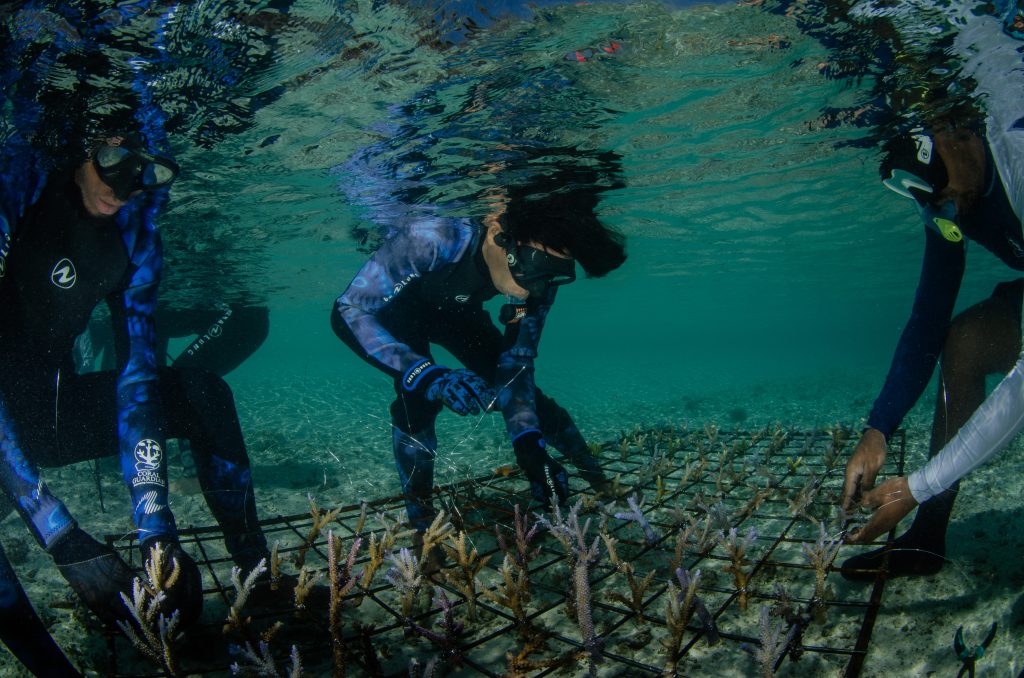
Creating barriers with coral reefs, to protect them from destructive threats.
Find out what we do

Blurred coral reef - Coral Guardian

Our approach of marine conservation

We have developed an innovative approach to coral ecosystem protection based on three pillars: conservation, awareness programs & science.

© Julien Holleville
© Julien Holleville

Participatory marine conservation

We work with local authorities on the ground to establish marine protected areas and restore destroyed areas.

Find out more

© Alban Taravello - W2P

Awareness programs

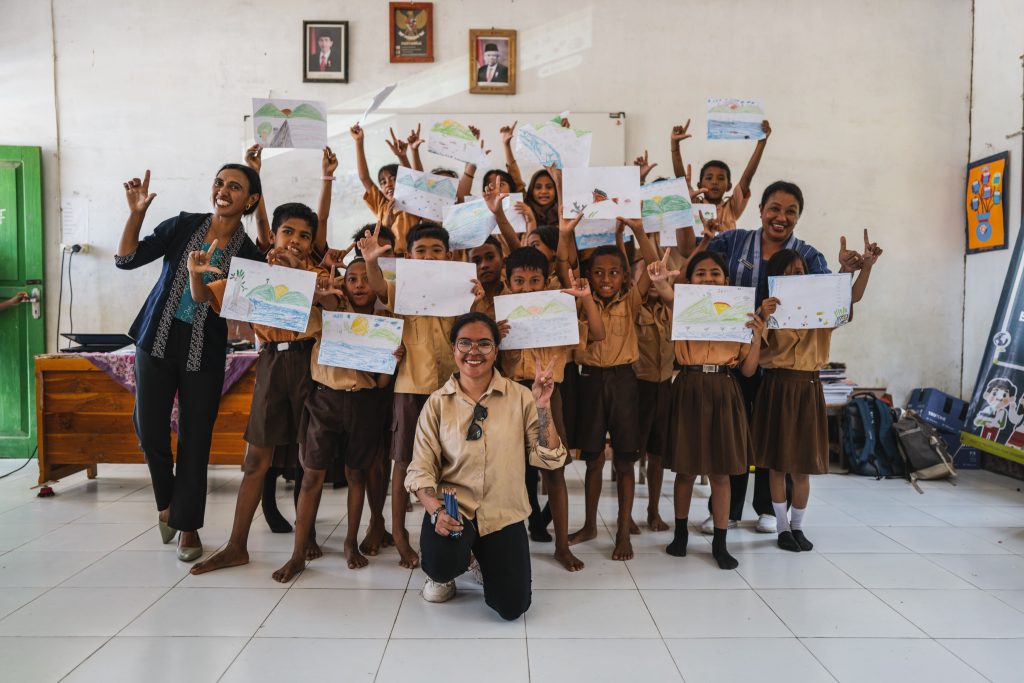
We raise awareness among local populations and the general public on the importance of protecting corals to preserve the unique biodiversity they represent.

Find out more

© Rafael Camacho
© Rafael Camacho

Science

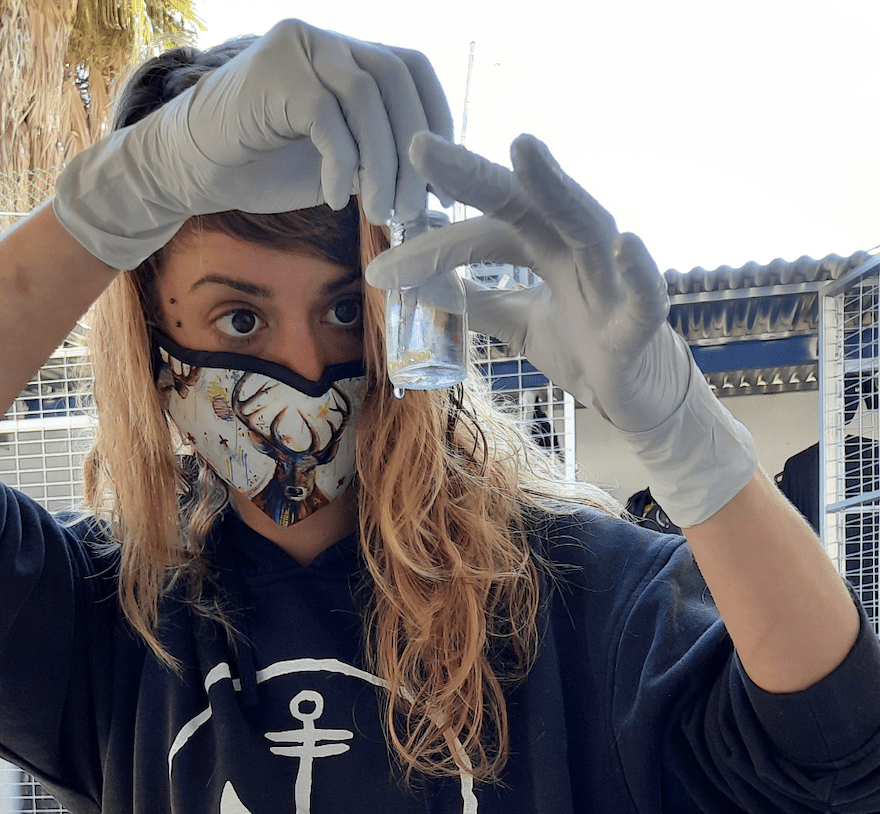
We collect scientific data from our areas of restoration, including the adaptation of corals to global warming.

Find out more

We believe in the power of multiple small and locally managed marine conservation programmes. Protection is all the more effective when it is carried out by local people and by working all together.”


Coco Tamlyn, Director at Coral Guardian

Our operational areas for conservation

Indonesia

Where does it take place?

Pulau Hatamin Coral Sanctuary in collaboration with the local NGO WES: located in the north-west of Flores, next to Komodo National Park in Indonesia; at our request, this area was officially declared “Area of Rehabilitation” in September 2019 by the Indonesian government.


Why is it important to act?

The disruption of the food chain caused by overfishing and dynamite fishing has affected the balance of local, coral ecosystems.


Looking ahead in terms of project evolution

Fishermen will be able to significantly help reduce pressure on marine biodiversity locally. This will result in improved living conditions for these communities through the regeneration of fish stocks.
Spain

Where does it take place?

We are collaborating with the NGO Coral Soul on the project Deep CORE in the Mediterranean sea, in the region of Punta de la Mona in Spain.


Why is it important to act?

The project Deep CORE responds to the problem of the degradation of the marine environment in Punta de la Mona, linked to an increase in pollution in the Mediterranean Sea. The area has a very rich biodiversity: since the 1980s, the Punta de la Mona area has been declared a natural park. However, despite these protective measures, the area is threatened by human activities and the coral ecosystem are damaged. Our mission will involve a seabed clean-up, awareness-raising programs for locals and tourists, as well as actions to restore the coral ecosystems.


Looking ahead in terms of project evolution

By becoming the first participatory marine conservation project involving local communities in the Mediterranean sea, Deep CORE could become a training centre for future coral conservation projects in the Mediterranean region.

Kenya

Where does it take place?

We are working in collaboration with the team from the local organisation Oceans Alive Foundation on the REEL Kilifi project (Restoring Reef Ecosystems for Enhanced Livelihoods) in Kenya, in the Indian Ocean.

This project is being developed within the Kuruwitu co-managed coastal area, in Kilifi County, covering 12,000 hectares. This area benefits from shared management of coastal and marine resources between the government and the local fishing community, making it a pioneering site for effective collaborative conservation in Kenya.


Why is it important to act?

In Kenya, during the 1990s, the collapse of 50 to 90% of coral reefs due to bleaching events had a devastating impact on the ecosystem. In addition, open-access, unregulated fishing led to the use of destructive gear and overfishing.

These factors have negatively affected the livelihoods of the country’s coastal artisanal fishing communities.


Looking ahead in terms of project evolution

The goal is to restore and conserve 70 hectares of coral reefs and their associated biodiversity across two sites within the Kuruwitu co-management area. This aims to strengthen ecosystem resilience and improve the livelihoods of local fishing communities, by testing and implementing adapted restoration techniques.

France

Where does it take place?

Throughout France, and on a global scale, we are developing awareness programs on the importance of coral reefs.


Why is it important to act?

The ocean is responsible for more than 50% of the oxygen we breathe. Coral reefs, in turn, are home to more than 25% of the world’s marine biodiversity. Even if these ecosystems may seem far from our daily lives, we are all affected and it is vital that we protect them.


Looking ahead in terms of project evolution

Everyone has a role to play in protecting the ocean and its ecosystems. If everyone acts on their own, we can try to solve the ecological and social crisis we are currently going through.

Worldwide

Where does it take place?

The Coral Guardian Community is an initiative set up to expand Coral Guardian’s participatory marine conservation model worldwide. Anyone involved in the protection of coral reefs can apply to become part of the Coral Guardian Community program and thereby attain advice and support from Coral Guardian.


Why is it important to act?

Coral Guardian believes that, in order to have an effective social and environmental impact in today’s ecological crisis, it must urgently share its knowledge and field-based expertise to as many actors as possible.


Looking ahead in terms of project evolution

The Coral Guardian Community  was therefore set-up to accompany project leaders to help them address environmental issues in relation to coral reefs. Solutions are available and we must act quickly to put them in place.
Indonésie Indonesia Espagne Spain Kenya France France World Worldwide

Where does it take place?

Pulau Hatamin Coral Sanctuary in collaboration with the local NGO WES: located in the north-west of Flores, next to Komodo National Park in Indonesia; at our request, this area was officially declared “Area of Rehabilitation” in September 2019 by the Indonesian government.


Why is it important to act?

The disruption of the food chain caused by overfishing and dynamite fishing has affected the balance of local, coral ecosystems.


Looking ahead in terms of project evolution

Fishermen will be able to significantly help reduce pressure on marine biodiversity locally. This will result in improved living conditions for these communities through the regeneration of fish stocks.

Where does it take place?

We are collaborating with the NGO Coral Soul on the project Deep CORE in the Mediterranean sea, in the region of Punta de la Mona in Spain.


Why is it important to act?

The project Deep CORE responds to the problem of the degradation of the marine environment in Punta de la Mona, linked to an increase in pollution in the Mediterranean Sea. The area has a very rich biodiversity: since the 1980s, the Punta de la Mona area has been declared a natural park. However, despite these protective measures, the area is threatened by human activities and the coral ecosystem are damaged. Our mission will involve a seabed clean-up, awareness-raising programs for locals and tourists, as well as actions to restore the coral ecosystems.


Looking ahead in terms of project evolution

By becoming the first participatory marine conservation project involving local communities in the Mediterranean sea, Deep CORE could become a training centre for future coral conservation projects in the Mediterranean region.

Where does it take place?

We are working in collaboration with the team from the local organisation Oceans Alive Foundation on the REEL Kilifi project (Restoring Reef Ecosystems for Enhanced Livelihoods) in Kenya, in the Indian Ocean.

This project is being developed within the Kuruwitu co-managed coastal area, in Kilifi County, covering 12,000 hectares. This area benefits from shared management of coastal and marine resources between the government and the local fishing community, making it a pioneering site for effective collaborative conservation in Kenya.


Why is it important to act?

In Kenya, during the 1990s, the collapse of 50 to 90% of coral reefs due to bleaching events had a devastating impact on the ecosystem. In addition, open-access, unregulated fishing led to the use of destructive gear and overfishing.

These factors have negatively affected the livelihoods of the country’s coastal artisanal fishing communities.


Looking ahead in terms of project evolution

The goal is to restore and conserve 70 hectares of coral reefs and their associated biodiversity across two sites within the Kuruwitu co-management area. This aims to strengthen ecosystem resilience and improve the livelihoods of local fishing communities, by testing and implementing adapted restoration techniques.

Where does it take place?

Throughout France, and on a global scale, we are developing awareness programs on the importance of coral reefs.


Why is it important to act?

The ocean is responsible for more than 50% of the oxygen we breathe. Coral reefs, in turn, are home to more than 25% of the world’s marine biodiversity. Even if these ecosystems may seem far from our daily lives, we are all affected and it is vital that we protect them.


Looking ahead in terms of project evolution

Everyone has a role to play in protecting the ocean and its ecosystems. If everyone acts on their own, we can try to solve the ecological and social crisis we are currently going through.

Where does it take place?

The Coral Guardian Community is an initiative set up to expand Coral Guardian’s participatory marine conservation model worldwide. Anyone involved in the protection of coral reefs can apply to become part of the Coral Guardian Community program and thereby attain advice and support from Coral Guardian.


Why is it important to act?

Coral Guardian believes that, in order to have an effective social and environmental impact in today’s ecological crisis, it must urgently share its knowledge and field-based expertise to as many actors as possible.


Looking ahead in terms of project evolution

The Coral Guardian Community  was therefore set-up to accompany project leaders to help them address environmental issues in relation to coral reefs. Solutions are available and we must act quickly to put them in place.

“It is very rewarding to see a recovered area, having seen it with broken corals that were almost dead and a lot of accumulated waste, and then once you have cleaned it up, that feeling is indescribable. Because you see life flowing again.”


Marina Palacios, Director of Deep CORE, a Blue Center project

Find out more about the Blue Center